

Webinar TakeawaysHousing
Fewer than 30% of U.S. households that planned to purchase a home last year actually did so, according to NerdWallet’s annual home buying survey released at the beginning of 2026. The 71% that reported delaying their homeownership dreams largely cited their inability to afford homes on their local market.
The issue is so pervasive that one group of Arizona credit unions joined together in 2025 to tackle the challenge in their community.
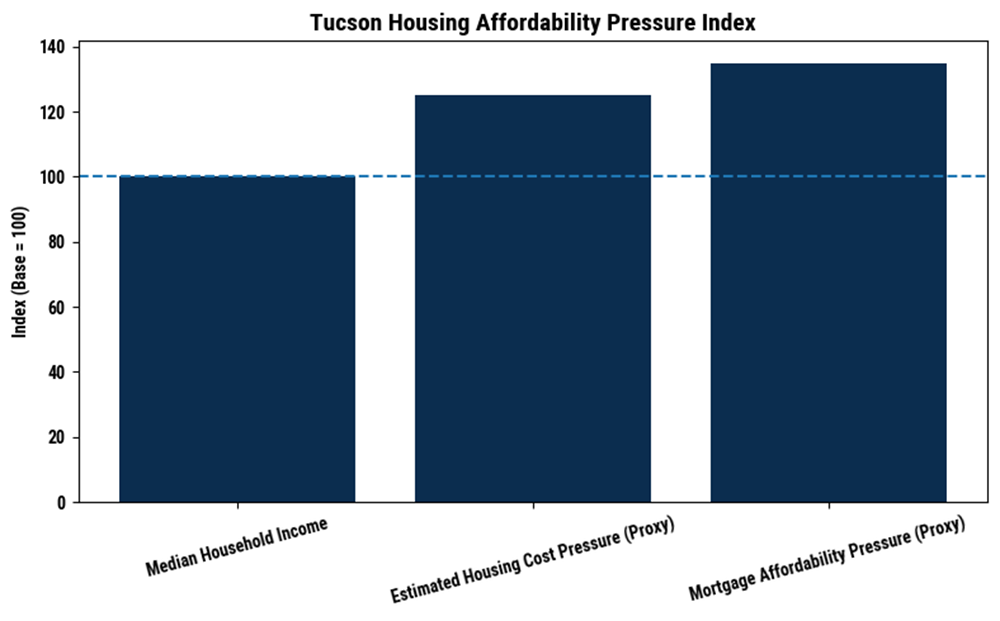
Housing and mortgage affordability pressures are significantly exceeding Tucson’s median household income, highlighting the growing strain on households despite many having stable earnings.
Tucson Welcome Home Program represents the combined efforts of the GoWest Foundation, Pima Federal Credit Union ($1.5B, Tucson, AZ), Tucson Federal Credit Union ($875M, Tucson, AZ), Vantage West Credit Union ($3.3B, Tucson, AZ), Hughes Federal Credit Union ($2.5B, Tucson, AZ), and Pyramid Credit Union ($247M, Tucson, AZ).
Speaking during a Callahan & Associates client webinar, leaders from the five institutions outlined three lessons from launching and managing a shared affordable housing program.
1. Build A Program Based On Market Needs
Leaders agree the key first step was aligning around a clear, shared goal with a solution each institution could execute.
Tucson Welcome Home aims to serve households that have strong payment histories and can reasonably afford a mortgage payment yet remain locked out of ownership by the down payments or monthly insurance costs. The program caps eligibility at 140% of area median income, a broader threshold than many affordability programs to better reflect market realities.
Operationally, participating credit unions stress-tested the program before launch by breaking into smaller working groups and asking subject-matter experts to scrutinize potential pressure points.
Program Snapshot
- Financing Structure
- Up to 100% LTV financing.
- No down payment required.
- No mortgage insurance.
- Pricing aligned with traditional 30-year loan.
- Borrower Requirements
- Household income up to 140% of the area median income.
- Stable employment or income.
- Completion of homeownership class
- Pima County property.
2. Balance Risk With Reward
To establish a loan loss reserve, the five credit unions received a grant from the GoWest Foundation. The reserve doesn’t cover the full balance of the loans, but it does provide enough protection to give institutions the confidence to branch out without taking on undue strain on their balance sheets. To ensure fairness and manage shared risk, the group set clear guardrails, including a cap of 15 loans per originating credit union, preventing any one institution from drawing disproportionately on the reserve and keeping what participants described as a “level playing field.”
To further alleviate the risk, the program lifts best practices from other payment assistance programs; for example, by requiring participants to complete a homeownership education class.
Credit union leaders say the program has yet to record a loss, a track record that increases comfortability with the program and positions it for potential expansion.
3. Look Ahead To Sustainability And Scale
Encouraged by early results, conversations are underway with institutions in Phoenix, with the potential to expand the model beyond Tucson and eventually take it statewide. Additionally, the credit union partners hope to prove their model can sustainably stand on its own without relying on grant support, demonstrating that credit unions can scale responsible 100% financing.
Want Access To This Webinar And More?
Unlock Callahan’s full library of webinars led by your credit union peers. With 20+ new events annually and an extensive on-demand catalog, you’ll stay connected with industry trends and walk away with practical, actionable insights.
