

Financial Wellbeing
New research from Gallup suggests small, everyday interactions have a major influence on long-term member relationships.
Emotional engagement is a key advantage in an increasingly competitive marketplace. In 2018, a retail banking study from Gallup found engaged consumers are at least five times more likely to stay with their financial institution and more than twice as likely to have multiple products. Ongoing studies continue to support these findings.
In a joint webinar hosted by Callahan & Associates and Gallup on Nov. 12, we shared new research on the financial moments that influence member relationships and long-term engagement.
Opportunities For Differentiation
Consumers have three foundational requirements from nearly every organization or brand:
- Save Time — Deliver convenient, efficient experiences.
- Offer Choices — Provide options that accommodate individual needs.
- Deliver Value — Demonstrate tangible benefits from the relationship.
But there’s a difference between delivering excellent service and delivering meaningful service. How can credit unions differentiate themselves from competitors working to meet the same expectations?
- Make Members Feel Valued — Demonstrate intentional personal care.
- Get It Right The First Time — Understand members’ needs and deliver a comprehensive solution.
- Be There When Things Go Wrong — Resolve issues with empathy and accountability.
That last piece of the puzzle is significant. Gallup research indicates resolving a member’s problem exceptionally well builds strong emotional engagement.
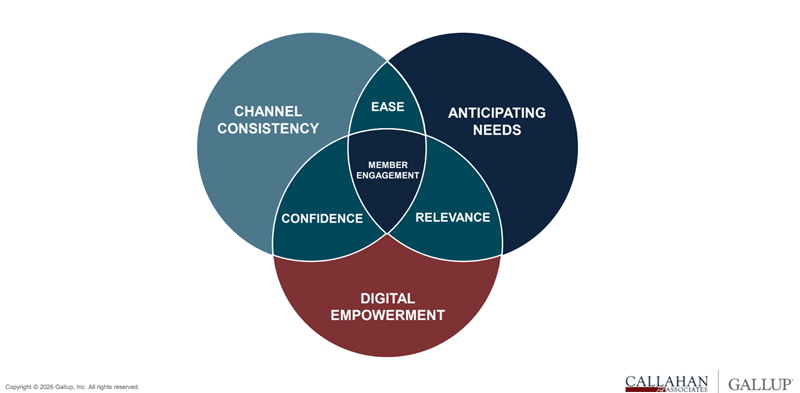
Gallup research finds channel consistency, anticipating needs, and digital empowerment interact holistically to create strong member engagement.
Moments That Matter
Some interactions carry more weight in a member relationship than others, with the potential to strengthen trust or erode it. These “moments that matter” generally fall into three broad categories.
Moments Of Vulnerability
This includes situations involving fraud, denied loans, financial difficulties, or unresolved service problems. Members need reassurance, empathy, and practical assistance with strong communication. Handling these moments poorly can make members take their business elsewhere.
Consequential Financial Decisions
This includes situations involving financial advice, debt management, and long-term planning. The goal for a credit union is to position itself as a trusted partner in improving a member’s financial life, not simply a place where they house their money.
Relationship Turning Points
This includes account openings, moving accounts, or changing a primary financial relationship.
The Importance Of Front-Line Employees
Front-line employees have firsthand knowledge of members’ financial challenges, needs, and frustrations. Credit unions must equip and empower these valuable resources with both knowledge and ample support.
Incentivizing meaningful interactions over simple efficiency is one way to do this; for example, by monitoring hold times to make better staffing decisions. Investing in employee wellbeing is another, as stressed workers are more likely to struggle to provide personalized care.
Financial Wellbeing Consortium
Through the Member Engagement & Financial Wellbeing Consortium, Callahan and Gallup help credit unions measure what matters, act with confidence, and build stronger member relationships that fuel growth.